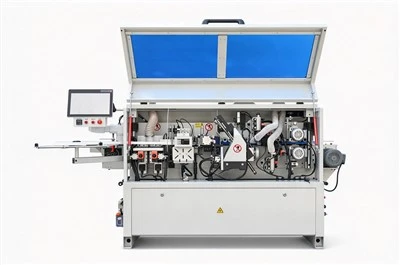
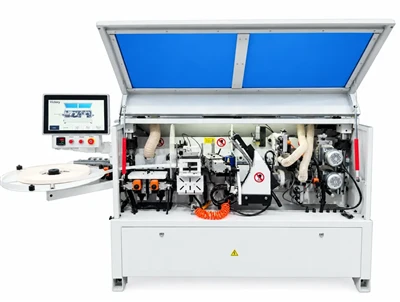
Edge banding machines, as a key piece of equipment in the woodworking machinery industry, play a crucial role. So, what exactly are the main functions of an edge banding machine?
Working Principle of an Edge Banding Machine
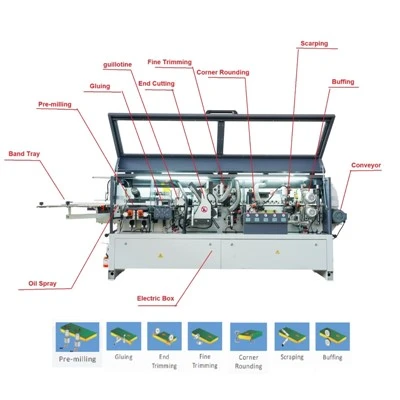
Edge banding machines primarily use hot melt adhesive to bond edge banding material to the cut surfaces of boards. The process includes multiple steps such as tape feeding, tape cutting, pressing, front and back trimming, top and bottom edge trimming, top and bottom fine trimming, top and bottom scraping, and polishing, to ensure a perfect edge banding effect.
Main Functions of an Edge Banding Machine
Enhancing Aesthetics: Edge banding machines can finely process the cut surfaces of boards, ensuring a tight, seamless bond between the edge banding material and the board, thereby enhancing the overall aesthetics of the product.
Enhancing Durability: Edge banding effectively protects the edges of boards from damage caused by moisture, impacts, and other factors, thus extending the product's lifespan.
Increasing Production Efficiency: Compared to manual edge banding, edge banding machines offer a higher degree of automation and production efficiency, significantly reducing labor costs and production time.
Applications of Edge Banding Machines in the Woodworking Industry
Edge banding machines are widely used in the woodworking industry, playing a crucial role especially in furniture manufacturing and interior decoration. Whether it's solid wood furniture or panel furniture, edge banding is indispensable for processing. Furthermore, with the continuous development of the woodworking industry, the technological level and application scope of edge banding machines are constantly expanding.
The main function of edge banding machines is to enhance the aesthetics and durability of panel products while increasing production efficiency. In the woodworking industry, edge banding machines have become an indispensable piece of equipment, providing strong support for the industry's development.