For most of the past decade, a fully automatic edge banding machine was the last item on a mid-size panel furniture factory's equipment list. Manual and semi-automatic units were affordable, operators were available, and edge banding automation was assumed to belong to the export giants.
That assumption is no longer holding. Among the enquiries reaching TingTing Group this year, the centre of gravity has moved from the very large plant toward the 20 to 80 person workshop - factories that need finished-edge quality but cannot justify a production line.
Three shifts explain the change.
Shift one: compact full-function machines are replacing entry-level units
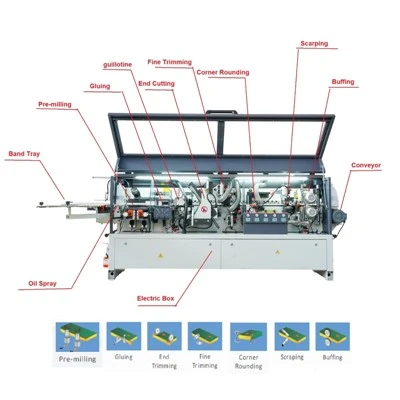
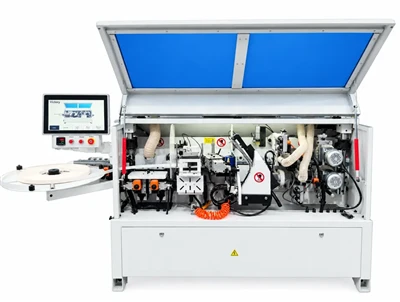
The first shift is about floor space. A workshop that once ran a semi-automatic edge banding machine in a corner is now looking at machines that fit the same footprint but carry a complete station sequence - pre-milling, gluing, end trimming, fine trimming, scraping and buffing.
The TT-306 platform was built for this bracket. Its eight models run from 1,750 mm to 3,220 mm in body length, use 4.0 kW to 6.8 kW of total power, and carry up to seven working stations depending on the model. Feed speed is a single 8 m/min, which suits shops running one operator per machine rather than a paced line.
What buyers gain from the edge banding machine is not speed. It is the disappearance of a second operation: no batch sent out for edge finishing, no rework loop when a trimming mark shows up after assembly.
Shift two: pre-milling has stopped being optional
On a modern edge banding machine, pre-milling used to be specified only by factories running high-value veneers. It is now the most common upgrade request we receive, and the reason is material quality.
Panel edges arrive from the saw with a small vertical deviation and a visible saw mark. Glue will bond to that surface, but the tape sits on an uneven base, so the joint line shows and the edge is more likely to lift later. A pre-milling unit squares the edge immediately before gluing, which gives the adhesive a clean, uniform face to bond to.
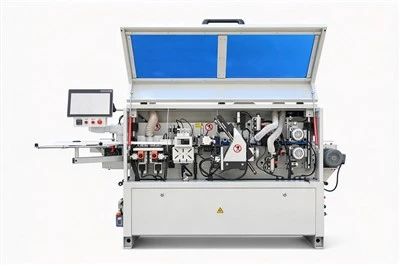
On the TT-308DSP, pre-milling is the first station in a six-station sequence, followed by gluing, end trimming, fine trimming, scraping and buffing. The machine runs at 8, 12 or 16 m/min and draws 8.15 kW total, with a body of 3,450 × 780 × 1,420 mm and a gross weight of 910 kg in its wooden case.
The practical argument is simple: one extra station removes an entire class of rework.
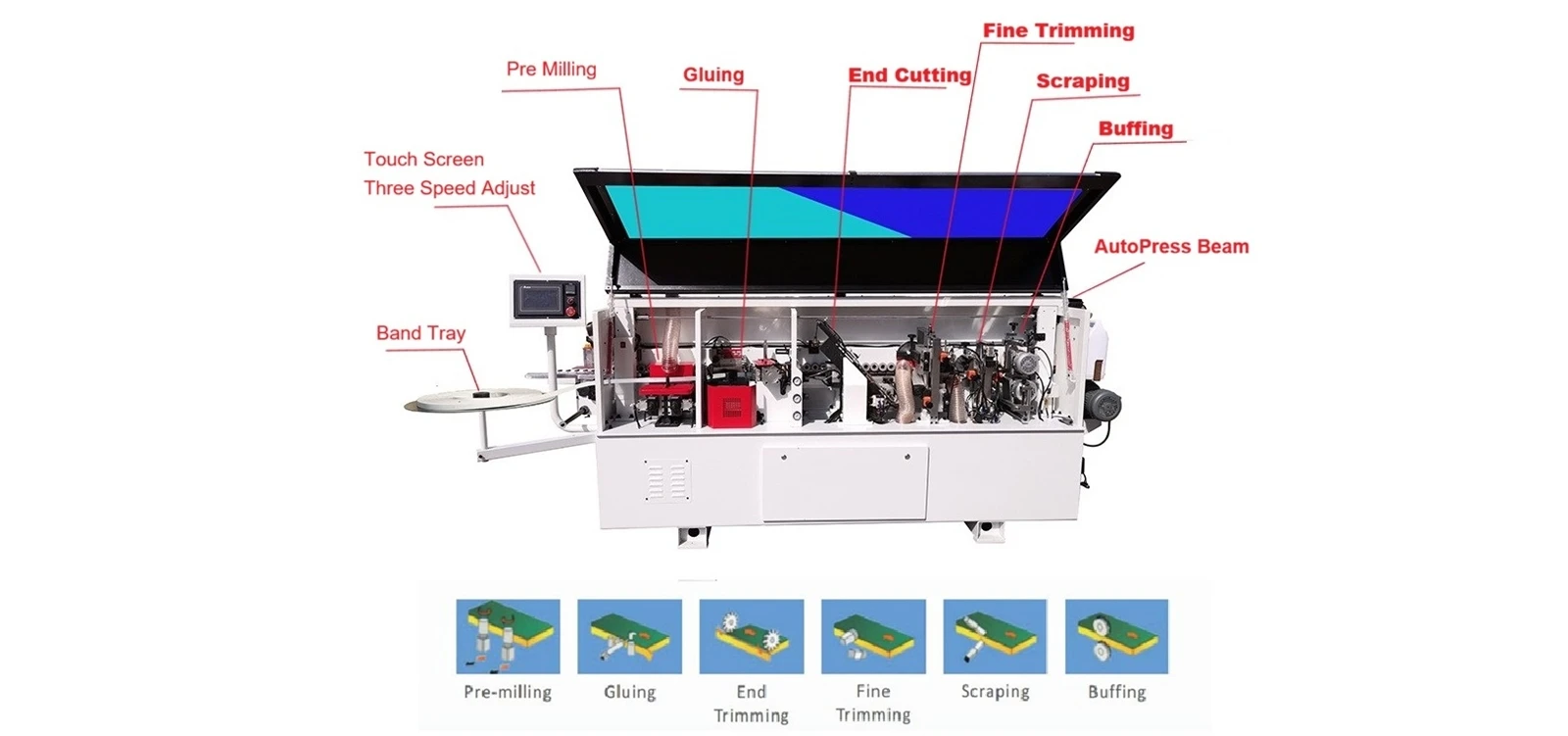
TT-308DSP automatic edge banding machine with pre-milling as the first station.
Shift three: buyers are shortening the line, not lengthening it
The third shift is about where an edge banding machine sits inside the production cell. Instead of adding machines in a row and accepting the handling between them, mid-size factories are asking for fewer, denser cells: one operator, one panel handling, several processes completed before the panel is set down.
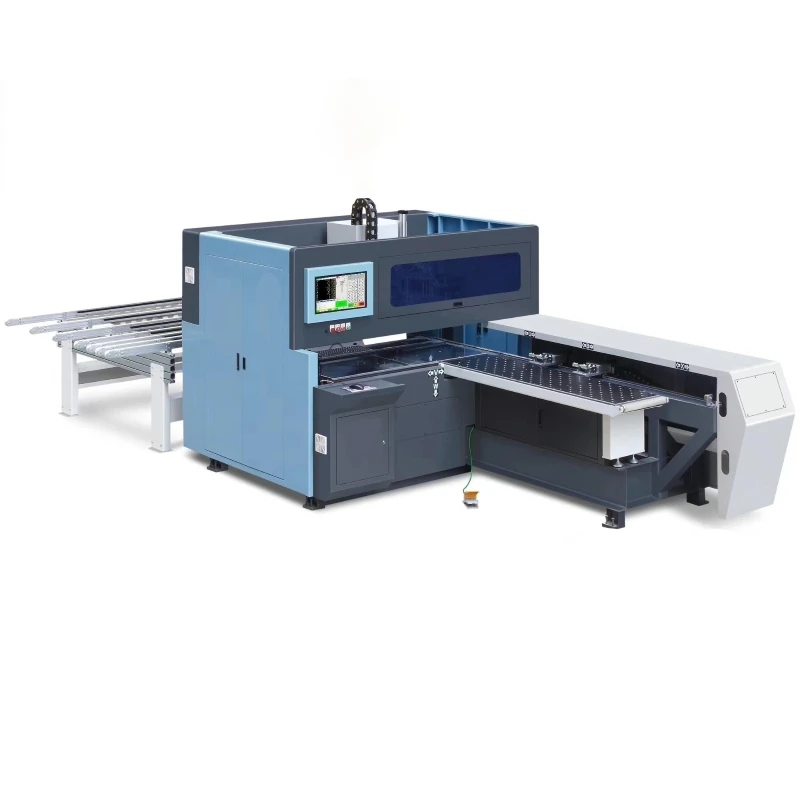
That is the same logic behind six sided CNC boring centres, which drill and groove all six faces of a panel in a single clamping. A TT-M6, for example, works panels up to 3,050 × 900 mm with 19 vertical and 8 horizontal spindles and traverses at 80 m/min. Placed next to a compact edge bander, it removes the flip-and-reload step that consumes both time and accuracy.
None of this requires a new building. It requires buying two machines that fit the room you already have.
What buyers are checking before they sign
- Minimum panel size. Drawer fronts and door rails are the constraint, not the wardrobe side. The TT-306DBT handles panels down to 80 × 50 mm through independent dual-motor end trimming.
- Edge tape range. The TT-306 platform covers 0.4 mm to 2 mm and the TT-308 platform 0.3 mm to 2 mm; 3 mm tape needs custom cutters on either.
- Panel thickness. Both platforms cover 10 mm to 45 mm, which spans everything from a 12 mm back panel to a 40 mm countertop.
- Corner quality. Corner rounding is standard on the TT-308 DS, DSR and DSA models, and it is the difference between an edge that survives packing and one that does not.
- Certification and parts. CE certification is the entry ticket; the real question is how fast a cutter head or a pressure roller arrives in month eighteen.
The service question is becoming the purchase question
As edge banding machine specifications converge, the differentiator moves to support. A factory running two shifts cannot wait three weeks for a glue pot thermocouple. Buyers comparing Chinese and European suppliers increasingly weigh lead time and spare-parts access alongside price and specification, particularly in Southeast Asia where new capacity is being added fastest.
TingTing Group's warranty structure reflects that split: two years on the touch screen, inverter and PLC, one year on motors. The logic is that the electronics fail first, and the mechanical parts wear predictably.
What this means for 2027
If the current direction in edge banding automation holds, the mid-size factory of 2027 will look less like a scaled-down version of a large plant and more like a compact cell: one boring centre, one edge bander, two operators, and a material flow measured in metres rather than buildings.
That is a smaller purchase than the industry used to sell. It is also a more repeatable one - and for equipment makers, repeatability is what turns a first order into a replacement cycle.
About TingTing Group
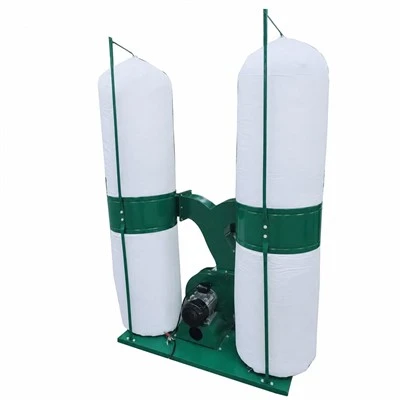
Founded in 2010, TingTing Group designs and manufactures woodworking machinery for panel furniture production, including automatic edge banding machines, six sided CNC boring centres and dust collection systems. The company serves customers in 20 countries through direct sales and international exhibitions.
Media contact: Frank Bao · +86 18279863556 · frankbaosales@gmail.com · www.tingtingwoodmachine.com
Ready to specify your next edge bander?
Tell us your panel mix, tape range and floor space. We will recommend the model and the station sequence that fits.