The 2026 equipment data does not describe a market that slowed down evenly. It describes one that divided - and the division is shaping purchasing decisions more than the slowdown itself.
The most detailed public reading of the year comes from the 2026 Millwork Equipment Trends Report, released in July by Würth Baer Machinery. It combines federal statistics, peer-reviewed academic research and industry benchmarking rather than the usual forecast modelling. Three findings matter most to anyone planning a machine purchase in the next twelve months: investment appetite fell overall, the typical buyer got smaller, and the reasons shops automate turned out to be different from the ones usually reported.
39%
of woodworking manufacturers planned to increase capital spending in 2026, down from 49% two years earlier
62%
expect to spend under $250,000 on capital investment over the next three years
59%
say made-to-order accounts for more than four-fifths of their product mix
4.6 vs 3.5
productivity versus labour shortages, as the benefit driving automation investment
The headline is not the slowdown, it is the split
In 2025, 48% of secondary woodworking manufacturers reported worse sales volume, up from 30% the year before. That is the number most coverage stops at. The more useful figure sits underneath it: among firms that grew sales volume in 2025, 53% planned to increase investment in 2026. Among firms that lost volume, just 28% did.
Shops that grew are nearly twice as likely to keep investing as shops that shrank. The consequence is not felt this quarter. A shop that defers equipment through two soft years does not return to the competitive position it left, and the gap compounds quietly while the market is quiet.
"Manufacturers are investing because productivity, quality, and production flexibility generate stronger returns," said Taylor J. Shafer, author of the report. "Shops that continue investing during slower markets are positioning themselves to outperform when demand rebounds."
Taylor J. Shafer, Würth Baer Supply, 2026 Millwork Equipment Trends Report
The 2026 buyer is a small shop with a tight budget
62% of woodworking firms said they would spend less than $250,000 on capital investment over the next three years - the highest share in the lowest bracket since the study began in 2020. The cause is structural rather than cyclical: 73.0% of US wood kitchen cabinet establishments have fewer than ten employees, against 58.1% across all US manufacturing. Millwork is a small-shop industry, and the equipment market that serves it is having to reflect that.
| Budget range | Typical equipment scope |
|---|---|
| Under $100,000 | Entry-level CNC router, single-sided edge bander, line boring machine |
| $100,000 – $250,000 | Nesting CNC, beam saw, mid-tier edge bander, wide belt sander |
| Above $250,000 | Work cells, automated material handling, finishing lines |
The practical consequence is that decisions in this market are made on payback measured in months rather than on scale. A machine that removes one bottleneck from a two-person shop can pay back faster than a larger machine that adds capacity nobody has asked for yet.
Made-to-order rebounded to 59%, and it changes the payback maths
59% of woodworking manufacturers said made-to-order production accounted for more than four-fifths of their product mix in 2026, up from a low of 47% in 2023. Custom mix is the single best predictor of what a machine is worth to a shop, because batch-of-one production punishes setup time: every job is a new setup.
The report links this directly to where shops have been computerising. Among woodworking shops that increased computerisation, 67.6% did it in product design and 65.5% did it in machining - precisely the two functions that batch-of-one production depends on most. When four out of five jobs are custom, automatic part labelling and parametric programming stop being upgrades and start being the way margin is held.
Shops are not automating because they cannot hire
Almost every trade article claims shops buy automated machinery because they cannot find workers. A survey of 139 North American secondary woodworking manufacturers, cited in the report, points the other way. Firms were asked to rate the benefits driving their investment in digitisation. Productivity finished first. Labour shortages finished last.
| Benefit driving automation investment | Rating (out of 5) |
|---|---|
| Improved productivity | 4.6 |
| Product quality | 4.4 |
| Process consistency | 4.4 |
| Increased customisation | 4.2 |
| Manufacturing flexibility | 4.1 |
| Shorter lead times | 4.0 |
| Raw material utilisation | 3.8 |
| Addressing labour shortages | 3.5 |
The same study asked what prevents firms from computerising further. Skilled labour difficulty scored highest, at 3.7. The distinction is worth stating plainly: labour is not why shops automate, it is why they cannot. That reshapes how an internal business case should be written - lead with parts per shift, rework rate and setup time, not with headcount.
The demographic backdrop explains why. Woodworkers held 214,600 jobs in the United States in 2024, and the Bureau of Labor Statistics projects employment will decline 2% to 211,100 by 2034, naming automation and the use of computer numerically controlled machines as the cause. Roughly 21,400 woodworker openings are still expected each year through 2034, and every one of them comes from workers transferring out or leaving the labour force rather than from industry growth. Shops are not competing for new entrants to the trade; they are replacing the people who leave it.
Training overtook machinery as the top investment priority
Employee training was the single most-named planned investment area for 2026, cited by 39% of firms - ahead of every machinery category on the list. Two years earlier, solid wood processing led at 37%; by 2026 it sat at 27%, behind training, assembly and sales.
The post-purchase data shows why. Among firms that invested in computerised equipment, 62.7% needed formal training in machine operation, 33.3% needed basic computing training, 32.0% needed advanced programming and 29.3% needed maintenance and repair training. Only 20.0% of investing firms sought no formal training at all.
A machine running at 60% of its capable output is a training problem, not a machine problem. The report's advice is to budget training as a line item alongside the machine rather than as an afterthought to it - which is also the cheapest capacity a workshop can buy.
The tariff dates worth circling
Proclamation 10976 took effect on 14 October 2025. It imposed a 10% ad valorem tariff on imports of certain softwood timber and lumber, and a 25% tariff on certain upholstered wooden products and on kitchen cabinets and vanities.
What a great deal of trade coverage still reports incorrectly is what happened next. The original proclamation scheduled the increases for 1 January 2026. Proclamation 11000, signed on 31 December 2025 and published in the Federal Register on 9 January 2026 as 91 FR 1039, postponed them by a further year. Effective 1 January 2027, the duty on upholstered furniture rises to 30% and the duty on kitchen cabinets and vanities rises to 50%.
| Product | In force since 14 Oct 2025 | From 1 Jan 2027 |
|---|---|---|
| Certain softwood timber and lumber | 10% | Unchanged |
| Certain upholstered wooden products | 25% | 30% |
| Kitchen cabinets and vanities | 25% | 50% |
The delay is tied to negotiation, not to a change of policy. The amended proclamation keeps the higher rates off countries with which the United States reaches an agreement addressing the national security impairment, and directs the US Trade Representative to continue negotiating. For a shop buying imported panels, components or hardware, that leaves the whole of 2026 to plan around the 2027 step.
One further date is worth noting. The Commerce Department was directed to report to the President on hardwood timber and lumber imports by 1 October 2026 - a deadline that has now passed. It is the signal the industry has been watching, because it indicates whether hardwood products are next in line.
The steepest cost curve is in parts, not machines
Woodworking machinery has rarely been more expensive in nominal terms. The Producer Price Index for sawmill and woodworking machinery reached 394.7 in May 2026 on a December 1980 base of 100 - roughly four times the index's starting level.
Parts run a steeper curve still. The index for parts, attachments and accessories stood at 167.7 in February 2026 on a June 2012 base of 100, which is a 67.7% increase in consumable and replacement part costs in under fourteen years. The purchase price of a machine is, in effect, a down payment on its lifetime cost, and that ongoing cost compounds separately.
Service planning follows the same logic. Among firms that invested in computerised equipment, 76.0% said a combination of in-house expertise and outsourcing was the best approach to repairs, against 14.7% who preferred to handle repairs entirely in-house. The practical reading is straightforward: establish a service route before you need one, because the machine that stops on a Friday afternoon does not wait for a quotation.
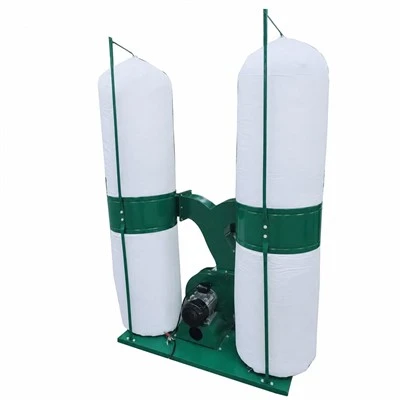
Dust collection: the compliance story that rarely makes the trend reports
Dust collection carries more regulatory weight than any other equipment category in a workshop, and it appears in almost no trend coverage - largely because it is specified as a cost line rather than as a capability. The numbers behind it are unambiguous.
| Measure | Value |
|---|---|
| OSHA permissible exposure limit for wood dust, 8-hour time-weighted average | 15 mg/m³ total dust / 5 mg/m³ respirable fraction |
| NIOSH recommended exposure limit | 1 mg/m³ |
| Wood and food products as a share of materials in combustible dust fires and explosions, 2018 | About 70% |
| Combustible dust incidents recorded by the US Chemical Safety Board, 1980–2005 | 281 incidents, 119 deaths, 718 injuries |
The gap between the legal minimum and the health-protective recommendation is fifteen to one. OSHA also notes that dust from oak, mahogany, beech, walnut, birch, elm and ash has been reported to cause nasal cancer in woodworkers. Wood accounted for more than 20% of all combustible dust explosions by material in the Chemical Safety Board dataset, which is why extraction is treated as a fire-safety system as well as an air-quality one.
For a workshop cutting oak or walnut, the distance between 15 mg/m³ and 1 mg/m³ is not an abstract standard. It is the specification that decides which extraction layout gets installed, how many points are captured at source, and whether the ducting is sized for the airflow the collector can actually deliver at the end of the run.
China's export picture: still the largest supplier, with a softer month
China remains the largest single source of woodworking machinery in world trade. In 2024 it accounted for 29.4% of global exports of the category, ahead of Germany at $1.63 billion, according to Observatory of Economic Complexity data for HS 8465. Between August 2025 and July 2026, China exported $2.42 billion of woodworking machines and imported $154 million.
In 2025 the largest destinations were Vietnam ($314 million), the United States ($241 million), Russia ($176 million), Thailand ($130 million) and Germany ($115 million). The fastest-growing markets between 2024 and 2025 were Thailand (+$39.2 million), Belarus (+$23 million) and Poland (+$13.7 million).
July 2026 was softer. Exports of $201 million were down $29.1 million, or 12.6%, from $230 million in June, and broadly flat year on year at −0.4%. The month's leading destinations were the United States ($23.7 million), Vietnam ($19.9 million), Russia ($13.9 million), Germany ($11.4 million) and India ($10.7 million).
A single month is not a trend, and monthly trade data is revised. What is more informative is the shape of the growth: the markets expanding fastest are not the traditional ones. For a manufacturer planning channel investment over the next two years, Thailand, Poland and Belarus belong on the same list as the established destinations.
WMF 2026 marked forty years in Shanghai
The China (Shanghai) International Furniture Production Equipment and Woodworking Machinery Exhibition ran from 5 to 8 September 2026 at the National Exhibition and Convention Center in Shanghai Hongqiao, in halls 7.1 and 8.1. The fortieth edition was held under the theme of a new balance in smart manufacturing and woodcraft connecting the globe, with more than 400 exhibitors from China and overseas across 52,000 square metres of display space.
The show ran alongside CIFF Shanghai, the China Building Decoration Fair and the upholstery technology exhibition as a combined home-furnishing smart manufacturing week, which placed design, material and manufacturing buyers in the same halls - a structure that mirrors how panel furniture production actually works, with equipment decisions made close to material and component choices.
The exhibition circuit continues in 2027: CIFM / interzum guangzhou is scheduled for 28 to 31 March 2027 at the Canton Fair Complex in Guangzhou, according to the organiser.
What this means for a workshop planning its next machine
Read together, the 2026 data points suggest a different set of questions from the ones shops asked three years ago. Six of them matter most.
- Build the case on productivity, not headcount. Productivity, quality and process consistency are the benefits manufacturers actually rate highest, and they are the case that gets approved. Parts per shift, rework rate and setup time are the numbers to bring to the meeting.
- Match capacity to product mix rather than to the largest machine the balance sheet allows. With 59% of manufacturers running more than four-fifths made-to-order, flexibility at the setup stage is worth more than raw throughput at the end of the line.
- Budget the training line alongside the machine. Training was the single most-named investment priority of 2026, ahead of every machinery category, and the post-purchase data shows why.
- Plan service and consumables before they are needed. Parts have risen far faster than machine prices, and most shops rely on a mix of in-house capability and an outside partner.
- Treat dust collection as compliance, not accessory. It is the one equipment category in the shop with a legally enforceable exposure limit attached to it.
- Specify for configuration rather than replacement. Voltage, frequency, extraction layout, workflow and operator language agreed at order means the machine is built around the shop, instead of the shop being rebuilt around the machine.

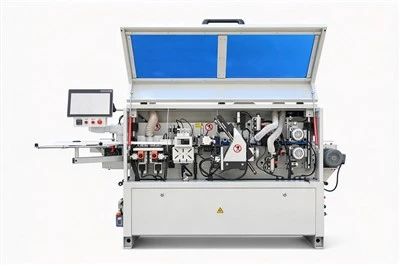
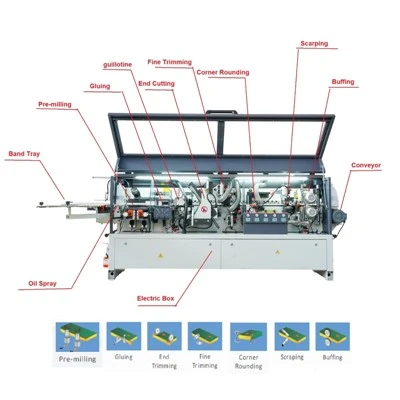
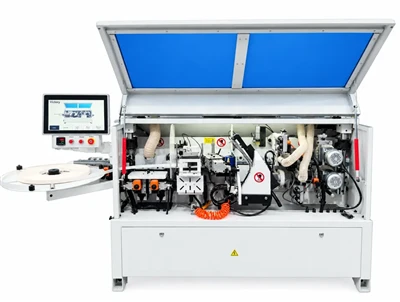
This is the market TingTing builds for. Since 2010 the company has manufactured in Changshu, Jiangsu for two distinct groups: growth-stage workshops that need equipment which is quick to commission and quick to pay back, and mid-to-large furniture producers that need throughput and consistency to hold across a full shift. The current generation of machines is developed around that split - single-station and integrated configurations across edge banding, panel processing and extraction, with commissioning, operator training and spare parts supply treated as part of the equipment rather than as additional services.
Planning equipment for 2026–2027?
Tell us your product mix, the bottlenecks you are trying to remove and your local power supply. We will come back with a configuration that fits the work in front of you, together with the packing and loading proposal.
Request a configuration reviewEmail our teamAbout TingTing
TingTing Woodworking Machinery Co., Ltd. manufactures edge banding machinery, panel processing equipment and dust collection systems for panel furniture production. Founded in 2010 and based in Changshu, Jiangsu Province, the company supplies growth-stage workshops and mid-to-large furniture manufacturers, and ships to Europe, North America, Southeast Asia, the Middle East and South America. CE-certified equipment is produced to order, with voltage, frequency, extraction configuration and paint finish set for the destination market. OEM and ODM production is available.

Media Contact
Una Fan
Tel / WhatsApp: +86 187 5826 7636
Email: unafan.tingting@gmail.com
Calista Pang
Tel / WhatsApp: +86 178 1653 5633
Email: calista.titing@gmail.com
Web: www.tingtingwoodmachine.com
Sources
Würth Baer Machinery, Millwork Equipment Trends in 2026: What the Data Actually Says - wurthbaermachinery.com
Kitchen Cabinet Manufacturers Association, 24 July 2026 - kcma.org
US Bureau of Labor Statistics, Occupational Outlook Handbook: Woodworkers - bls.gov
Federal Register, Proclamation 11000, 91 FR 1039, 9 January 2026 - federalregister.gov
OSHA, Woodworking eTool: Wood Dust - osha.gov
US Chemical Safety Board, Combustible Dust Hazard Study - csb.gov
Observatory of Economic Complexity, Woodworking machines in China (HS 8465) - oec.world
WMF 2026, China (Shanghai) International Furniture Production Equipment and Woodworking Machinery Exhibition - woodworkfair.com
CIFM / interzum guangzhou - interzum-guangzhou.cn