Two dates define the rest of the year for anyone selling wood products or woodworking equipment into Europe, the Middle East and North Africa. One of them is next week. The other arrives ten weeks later - and unlike most compliance deadlines, this one does not get longer because a company is small.
On 22 October WoodTech opens in Istanbul, the 39th edition of the region's woodworking machinery fair and the week when buyers from Europe, the Balkans, the Middle East, North Africa, the Caucasus and Central Asia are in one building. On 30 December the EU Deforestation Regulation becomes applicable to wood and wooden furniture - for large operators, for medium operators, and for the micro and small operators that make up most of the furniture industry.
That second date is the one that will change documents, data requests and purchase orders across the supply chain, so it is worth being precise about what the regulation actually says rather than what a summary said.
30 Dec 2026
EUDR applies to wood and wooden furniture - large, medium and wood-sector micro and small operators
30 Jun 2027
application date for micro and small operators in the other EUDR commodities
10 weeks
from mid-October 2026 to the date the wood deadline lands
420 Mha
of forest lost worldwide between 1990 and 2020, per FAO figures cited in the regulation
Istanbul first: the region's buyer week opens on 22 October
WoodTech 2026 runs from 22 to 25 October at the Tüyap Fair and Congress Center in Istanbul, organised by Reed Tüyap Fairs in cooperation with the Woodworking Machinery Industrialists Association (AIMSAD) and supported by the European Federation of Woodworking Machinery Manufacturers (EUMABOIS). Opening hours are 10:00 to 18:00 on 22, 23 and 24 October, and 10:00 to 17:00 on the closing day.
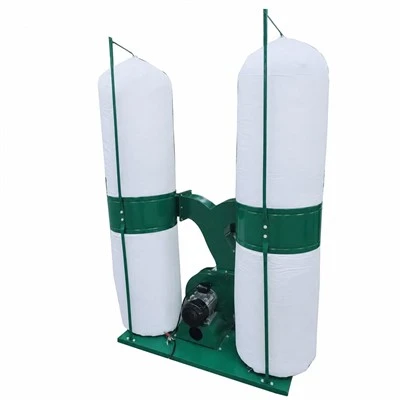
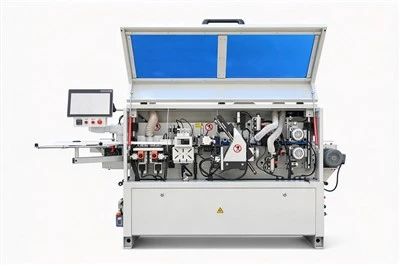
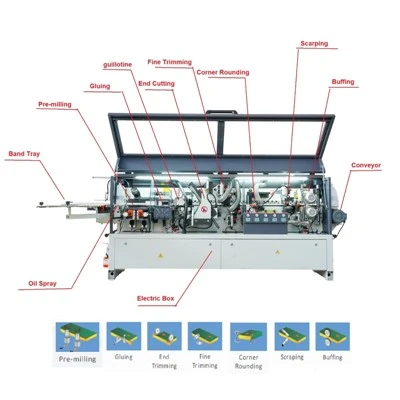
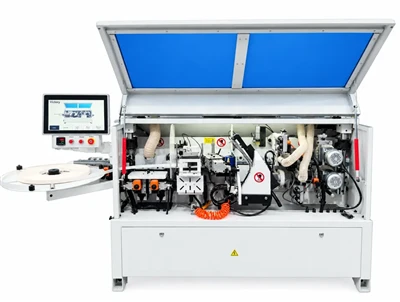
The show's stated focus - automation, digitalisation, smart manufacturing and sustainability - maps onto what the region is actually buying. The exhibit profile covers CNC machining centres, panel sizing and edge banding systems, log and timber processing machinery, surface treatment, cutting tools, robotics and production monitoring, alongside dust extraction and filtration systems and timber drying and moisture control equipment.
The hosting market is not a small one. Turkiye's woodworking machinery industry recorded approximately USD 354.1 million of production and USD 143.4 million of exports in 2025, against imports of USD 107.2 million - a foreign trade surplus of USD 36.2 million and an export-to-import coverage ratio of 134%. Bulgaria, Poland and Spain were among its leading export markets in the first quarter of 2026.
The 2025 edition gives a sense of the reach: 317 exhibiting companies and company representatives from 22 countries, and 21,076 professional visitors, of whom 3,477 came from 96 countries. For a machinery buyer in those target regions, the week compresses a year of supplier evaluation into four days.
Then 30 December: what the EUDR actually says
Regulation (EU) 2023/1115 of 31 May 2023, published in the Official Journal on 9 June 2023, replaced the EU Timber Regulation (Regulation (EU) No 995/2010) outright. Its scope runs across cattle, cocoa, coffee, oil palm, soya and wood, together with a long list of derived products that includes furniture.
The obligation it creates is stated in two parts. Relevant products may not be placed on the Union market or exported from it unless they are deforestation-free and have been produced in accordance with the relevant legislation of the country of production - and they must be covered by a due diligence statement.
The Commission amended the Regulation twice, in December 2024 and again in December 2025, with simplification measures and a further postponement of the application dates. The current timetable is the one that matters:
| Who | Applies from |
|---|---|
| Large and medium operators | 30 December 2026 |
| Micro and small operators - commodities already covered by the EU Timber Regulation, which includes wood and wooden furniture | 30 December 2026 |
| Micro and small operators - all other EUDR commodities | 30 June 2027 |
| Products newly added to scope (soluble coffee, certain palm oil derivatives, frozen cattle tongues) | 30 December 2027 |
Read the second row again. The extra six months that small businesses were given on other commodities does not apply to wood, because the wood sector was already regulated under the Timber Regulation and is therefore treated as already warned. A workshop with nine employees and an operator shipping thousands of containers share one date.
The five things the operator must collect - and which of them only the factory can supply
Article 9(1) of the Regulation sets out the information an operator has to collect, organise and keep for five years from the date the product is placed on the market or exported. It is a short list, and almost every item originates upstream of the customs broker.
| What Article 9(1) requires | Where it has to come from |
|---|---|
| Product description and HS code | Commercial invoice and customs classification |
| Country of production - meaning where the tree grew, not where the furniture was assembled | Timber purchase records |
| Geolocation of all plots of land where the commodities were produced, and the date or time range of production | The forestry supplier, passed down the chain |
| Quantity, expressed in kilograms of net mass for products entering or leaving the market | Nowhere yet, in most furniture factories |
| Conclusive, verifiable information that the commodities were produced in accordance with the law of the country of production | Harvest permits and concession records held by the mill |
Two details in that list are worth pausing on. The first is geolocation. Article 2(28) defines it as latitude and longitude coordinates using at least six decimal digits, and requires a polygon rather than a single point for plots of land larger than four hectares. That is a survey coordinate, not a town name, and it cannot be produced by the furniture plant itself.
The second is the consequence attached to it. Article 9(1)(d) is explicit that any deforestation or forest degradation on a given plot automatically disqualifies all relevant commodities and products from those plots from being placed on the market or exported. There is no offsetting, and no averaging across a mixed batch.
Quantity is the field that breaks first in practice. Net mass in kilograms of the wood content is not the same number as the gross weight on a packing list, because a carton also carries hardware, glass, foam, fittings and the carton itself. In most factories nobody has ever recorded it.
Who files, who is responsible, and how long the records stay
Practically every export sale places the filing obligation on the EU importer, not on the factory. Under the Regulation the "operator" is the party placing the product on the market, and Article 4(2) prohibits placing a relevant product on the market or exporting it without prior submission of a due diligence statement through the information system set up under Article 33.
Article 4(3) then attaches the liability: by making the statement available, the operator assumes responsibility for compliance, and must keep a record of the statement for five years from submission. Article 4(7) requires the operator to pass down the supply chain everything necessary to show that due diligence was exercised, including the reference numbers of the statements.
The due diligence system itself has three parts, set out in Article 8: information collection under Article 9, risk assessment under Article 10, and risk mitigation under Article 11. Two further provisions are less widely reported. Article 10(3) treats wood products covered by a valid FLEGT licence under Regulation (EC) No 2173/2005 as compliant with the legality requirement. Article 12(3) requires operators that are not SMEs to report publicly, at least annually, on their due diligence system.
Relevant products should not be placed or made available on the market or exported unless they are deforestation-free and have been produced in accordance with the relevant legislation of the country of production. To confirm that this is the case, they should always be accompanied by a due diligence statement.
Recital 48, Regulation (EU) 2023/1115
The small-operator question, answered precisely
Two separate things get confused in most summaries: the date on which the Regulation applies, and the scope of what a small company has to do. On the first, there is no relief - a wood-sector micro or small operator is in scope from 30 December 2026. On the second, there is.
- Article 4(8) exempts SME operators from exercising due diligence for relevant products that have already been subject to due diligence upstream and for which a due diligence statement has already been submitted. In those cases the SME provides the reference number of that statement on request. Any part of the product not already covered upstream still requires its own due diligence.
- Article 6(3) allows a microenterprise, or an operator who is a natural person, to mandate the next operator or trader further down the supply chain to submit the due diligence statement on its behalf - while retaining responsibility for compliance.
- Article 13 provides a simplified route where all relevant commodities were produced in countries or regions classified as low risk, removing the risk assessment and mitigation steps entirely unless the operator becomes aware of information pointing the other way.
Read together, the effect is that being small changes what a company has to do - it can lean on statements already filed further up the chain - but not when it has to be ready. The reference numbers it will be asked for are only available if someone upstream did the work, which is why supplier data requests are landing in inboxes now rather than in December.
Where the production floor enters the argument
The Regulation regulates goods, not machines, and nothing in it imposes a requirement on the equipment in a workshop. But the records Article 9 asks for are created where the wood is handled, and that is a manufacturing problem before it is a paperwork problem. Our reading of what actually has to hold up:
- Batch identity has to survive cutting. If a board batch cannot be followed into the units it became, the only defensible answer to a data request is the worst-case origin across the whole SKU.
- Production dates have to be reportable as a range. Article 9(1)(d) asks for the date or time range of production alongside the geolocation, which means job records, not shipment records.
- Certified and uncertified stock has to stay separable. Mixing forces the strictest answer onto everything.
- Net wood mass per unit has to be measured, not estimated. A figure derived from a density table will not survive comparison with the gross weight on a bill of lading.
- The spec sheet the buyer files from has to carry the compliance fields. Species, country of production, net wood mass and HS code belong on the same page as the dimensions, because that is the page the buyer's compliance team opens.

The same investment cycle covers the other half of the picture. Dust extraction and filtration, timber drying and moisture control, and production monitoring were all on the WoodTech 2026 exhibit profile precisely because workshops are buying compliance, consistency and traceability together rather than machine by machine.
Ten weeks, six actions
- Map every wood-bearing SKU to its HS code and confirm which entries sit in Annex I. The customs code, not the product photo, decides whether a piece is in scope.
- Open the supplier data request now, with species, country of production, plot geolocation and legality evidence in the same message. This request travels to whoever felled the tree, and a supplier who cannot answer in December is a supplier you will be replacing.
- Weigh the wood content of one representative unit per model, on a scale, and put the number in the product master. Once per model, not once per shipment.
- Establish how a batch number survives cutting, edging, drilling and packing, so that the production date range is reportable without reconstructing it later.
- Check which of your products have already been covered by an upstream due diligence statement, because that reference number is what Article 4(8) allows you to rely on.
- Name the person who answers compliance questions from buyers, and set a response time you can actually hold through the December peak.
If you are going to Istanbul next week, the same list is worth carrying into supplier conversations. The equipment questions and the compliance questions are converging: the buyer who asks what a machine can cut is increasingly the buyer who also asks what the machine can record.
Buying equipment in the 2026–2027 window?
Tell us your product mix, the bottlenecks you are trying to remove and your local power supply. We will come back with a machine configuration that fits the work in front of you, together with the packing and loading proposal.
Request a configuration reviewEmail our teamAbout TingTing
TingTing Woodworking Machinery Co., Ltd. manufactures edge banding machinery, panel processing equipment and dust collection systems for panel furniture production. Founded in 2010 and based in Changshu, Jiangsu Province, the company supplies growth-stage workshops and mid-to-large furniture manufacturers, and ships to Europe, North America, Southeast Asia, the Middle East and South America. CE-certified equipment is produced to order, with voltage, frequency, extraction configuration and paint finish set for the destination market. OEM and ODM production is available.

Media Contact
Una Fan
Tel / WhatsApp: +86 187 5826 7636
Email: unafan.tingting@gmail.com
Calista Pang
Tel / WhatsApp: +86 178 1653 5633
Email: calista.titing@gmail.com
Web: www.tingtingwoodmachine.com
Sources
Regulation (EU) 2023/1115 of 31 May 2023 on deforestation-free products, Official Journal L 150, 9 June 2023 - eur-lex.europa.eu
European Commission, Regulation on deforestation-free products - application dates, scope and amendments - environment.ec.europa.eu
Regulation (EU) 2025/2650 amending the application dates of Regulation (EU) 2023/1115 - eur-lex.europa.eu
WoodTech 2026, 39th International Woodworking Machinery, Cutting Tools and Hand Tools Fair, Istanbul, 22–25 October 2026 - woodandpanel.com