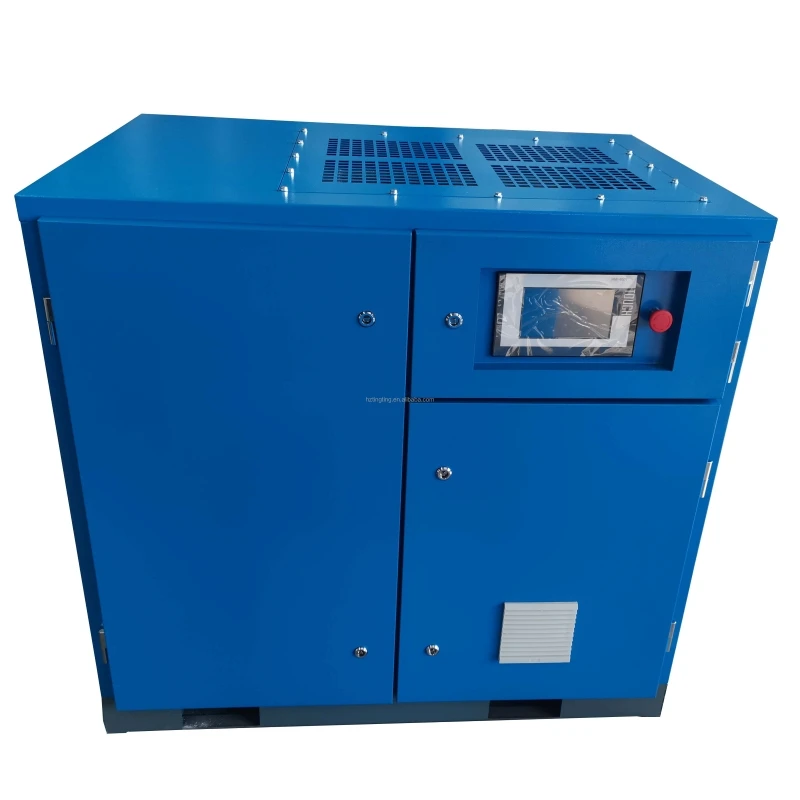
When selecting an air compressor, first determine the required operating pressure at the point of use, adding a margin of 1-2 bar. Then select the appropriate air compressor pressure. (This margin accounts for pressure loss over the distance from the compressor installation location to the actual point of use; adjust the margin between 1-2 bar based on the distance). Of course, the pipe diameter and the number of bends also affect pressure loss. A larger pipe diameter and fewer bends result in lower pressure loss; conversely, a smaller pipe diameter and fewer bends result in higher pressure loss.
Therefore, when the distance between the air compressor and the various points of use is too great, the main pipe diameter should be appropriately increased. If environmental conditions meet the air compressor's installation requirements and operating conditions permit, it can be installed near the point of use.
Appropriate selection benefits both the user and the air compressor equipment. Over-selection is wasteful, while under-selection may lead to problems such as the air compressor being underloaded for extended periods, insufficient air supply, or inability to achieve the required pressure.
The power selection should ensure that the power supply capacity meets the operating pressure and volumetric flow rate requirements, and that the power supply capacity is sufficient to power the matched drive motor.
Therefore, the steps for selecting an air compressor are: first determine the operating pressure, then determine the corresponding volumetric flow rate, and finally, determine the power supply capacity.