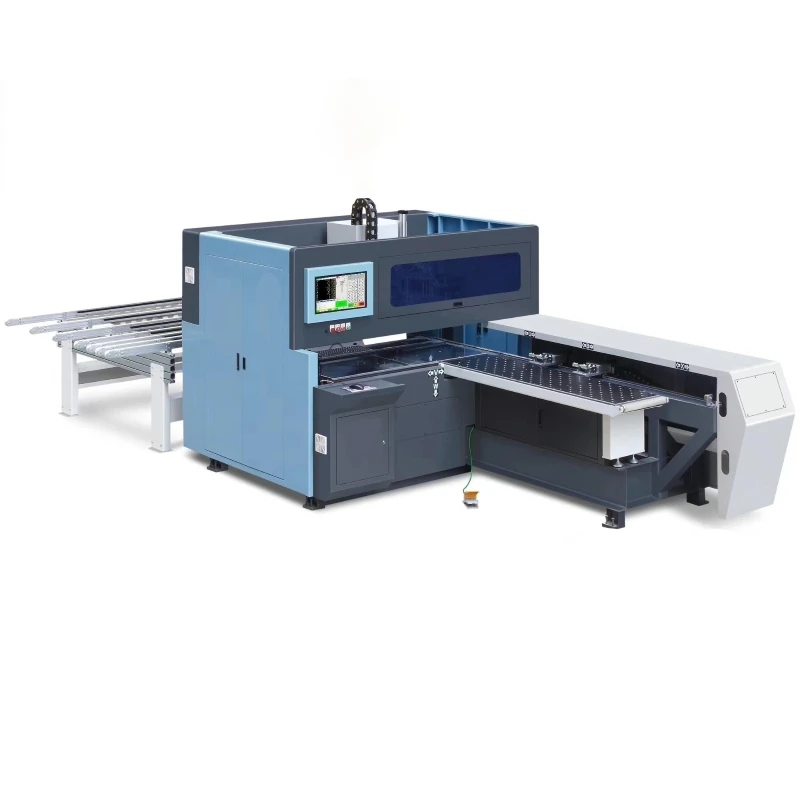
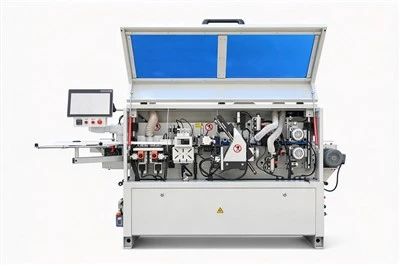
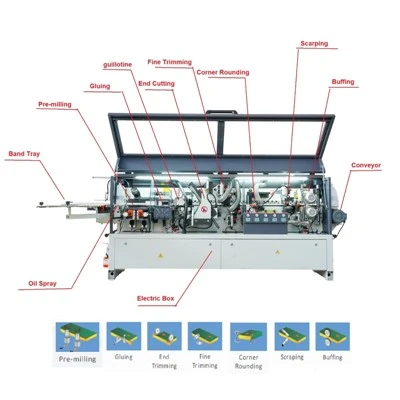
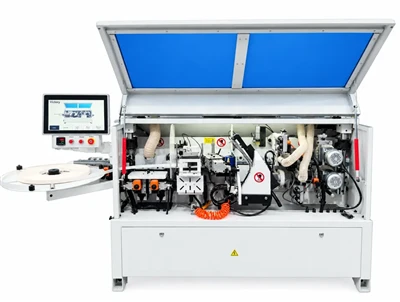
Edge banding is a crucial process in smart factories within the home furnishing industry. The flexible edge banding four-machine line, by combining multiple machines in a "U-shape," performs edge banding on all four sides in a single feed, improving both labor and space efficiency. It is a key step in realizing intelligent edge banding in Industry 4.0 of the home furnishing industry. Currently, mainstream edge banding processes include EVA, PUR, and laser edge banding.
PUR edge banding, due to the participation of water molecules in the moisture curing reaction to form a three-dimensional cross-linked network molecular structure, has a denser and stronger structure, requiring less adhesive-generally only about one-third of that used in EVA edge banding-and offering better environmental performance. PUR edge banding is irreversible; it will not melt even after reheating after solidification, providing good bonding strength and resistance to high and low temperatures. It does not delaminate even at temperature differences of -30℃ and 130℃.
Compared to EVA edge banding, which is prone to adhesive overflow, PUR edge banding uses less adhesive and does not mold. It does not produce noticeable adhesive lines on either light-colored or dark-colored boards. Laser edge banding involves applying a photosensitive coating to the cut surface of a board, followed by the use of a specially designed laser edge banding tape. The high temperature and rapid laser treatment firmly bonds the cut surface and the tape together, creating a nearly seamless finish. Laser edge banding uses no glue throughout the process, making it highly environmentally friendly. It produces a smooth, rounded edge with no glue residue, and offers good heat resistance, light resistance, and durability, as well as some water resistance.